

Adventure tourism has experienced tremendous growth in recent years, with travelers seeking unique outdoor experiences that combine excitement, nature, and physical activity. Among the most popular adventure attractions are canopy tours and ziplines. While many people use these terms interchangeably, they are not exactly the same. Understanding the difference between a canopy tour and a zipline can help travelers choose the experience that best matches their interests, fitness level, and sense of adventure.
In this comprehensive guide, we will explore the key differences between canopy tours and ziplines, their features, benefits, safety considerations, and how to decide which activity is right for you.
What Is a Canopy Tour?
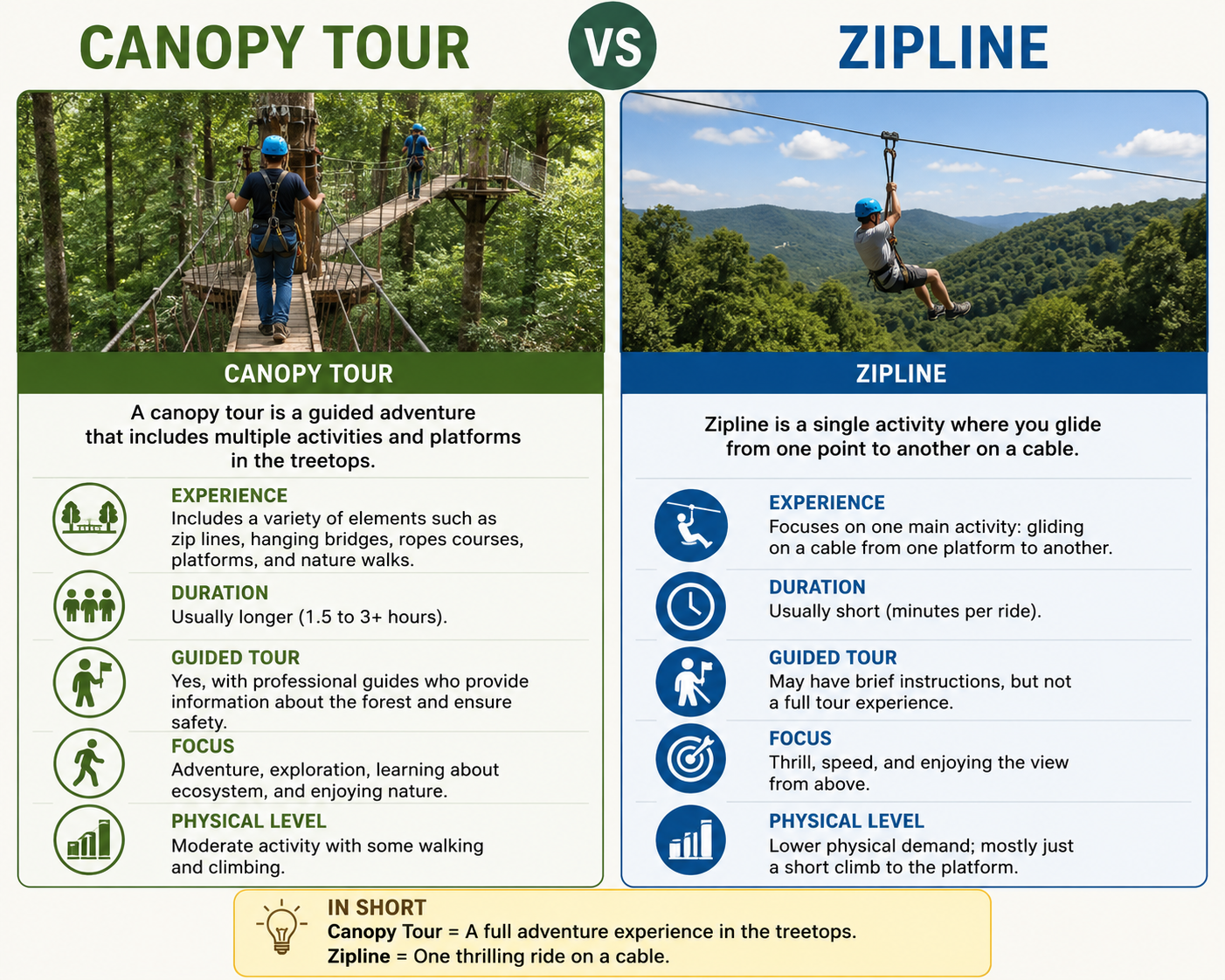
A canopy tour is a guided adventure activity that takes participants through the forest canopy using a combination of elevated platforms, suspension bridges, zip lines, rope courses, and walking trails. The primary goal of a canopy tour is to provide an immersive nature experience while offering an exciting adventure.
Canopy tours were originally developed in tropical rainforests as a way to explore the upper layers of the forest without disturbing the environment. Today, they are available in forests, mountains, national parks, and eco-tourism destinations around the world.
Features of a Canopy Tour
A typical canopy tour may include:
- Multiple zip lines
- Hanging bridges
- Tree platforms
- Observation decks
- Nature walks
- Rope challenges
- Guided educational experiences
Participants move from one platform to another while learning about local wildlife, plants, and ecosystems from trained guides.
Purpose of a Canopy Tour
The main focus of a canopy tour is not just adrenaline. It combines:
- Adventure
- Nature exploration
- Environmental education
- Scenic views
- Physical activity
This makes canopy tours suitable for families, nature enthusiasts, and eco-tourists.
What Is a Zipline?
A zipline is a single adventure activity where participants glide along a steel cable from one point to another while secured in a harness. The rider is attached to a pulley system that moves along the cable, allowing them to travel quickly over valleys, forests, rivers, or other landscapes.
Ziplining is primarily designed to provide excitement, speed, and breathtaking aerial views.
Features of a Zipline
Common characteristics include:
- Steel cable system
- Safety harness
- Pulley mechanism
- Launch platform
- Landing platform
- High-speed descent
Some ziplines can reach speeds exceeding 60 miles per hour (97 km/h), depending on the terrain and cable design.
Purpose of a Zipline
The primary goals of ziplining are:
- Thrill and excitement
- Speed
- Adventure
- Scenic aerial views
Unlike canopy tours, ziplining usually focuses on one specific activity rather than a complete adventure package.
Key Differences Between Canopy Tours and Ziplines
Although ziplines are often included in canopy tours, there are significant differences between the two experiences.
1. Scope of Activities
Canopy Tour
A canopy tour includes several activities beyond ziplining. Participants may walk across suspension bridges, climb platforms, navigate rope courses, and explore forest trails.
Zipline
A zipline is a single activity involving movement along a cable between two points.
Winner
Canopy tours offer a broader adventure experience.
2. Duration
Canopy Tour
Canopy tours generally last between 1.5 and 4 hours depending on the course complexity.
Zipline
Individual zipline rides typically last a few minutes, although multiple zipline courses may extend the experience.
Winner
Canopy tours provide a longer and more immersive experience.
3. Educational Component
Canopy Tour
Many canopy tours include guided commentary about local wildlife, plants, geology, and conservation efforts.
Zipline
Zipline experiences generally focus on the ride itself rather than education.
Winner
Canopy tours are better for learning and environmental awareness.
4. Physical Activity Level
Canopy Tour
Participants may need to:
- Walk between platforms
- Climb stairs
- Cross bridges
- Navigate obstacles
This requires moderate physical effort.
Zipline
Most zipline rides require minimal physical exertion beyond climbing to the launch platform.
Winner
Ziplining is often easier for beginners and less physically demanding.
5. Adventure Style
Canopy Tour
Adventure is spread across multiple activities and experiences.
Zipline
Adventure is concentrated in the thrill of flying through the air.
Winner
Depends on personal preference.
6. Scenic Experience
Canopy Tour
Provides extended opportunities to observe nature from different viewpoints.
Zipline
Offers spectacular aerial views while moving quickly through the landscape.
Winner
Both provide excellent scenery, but canopy tours allow more time to enjoy it.
Safety Considerations
Safety is one of the most important factors when participating in any adventure activity.
Canopy Tour Safety
Professional canopy tour operators typically provide:
- Safety harnesses
- Helmets
- Gloves
- Trained guides
- Safety briefings
- Regular equipment inspections
Participants are continuously monitored throughout the tour.
Zipline Safety
Zipline operators use:
- High-strength steel cables
- Certified harness systems
- Automatic braking systems
- Professional guides
- Weight restrictions
Modern zipline systems are extremely safe when operated according to industry standards.
Safety Tips
Regardless of the activity, participants should:
- Follow all instructions
- Wear appropriate clothing
- Use provided safety gear
- Inform guides about medical conditions
- Avoid risky behavior
Benefits of Canopy Tours
Canopy tours offer numerous advantages beyond excitement.
1. Environmental Awareness
Participants gain knowledge about ecosystems and conservation efforts.
2. Physical Exercise
Walking, climbing, and balancing help improve fitness.
3. Family-Friendly Adventure
Many canopy tours accommodate various age groups.
4. Connection with Nature
Visitors spend extended periods surrounded by natural beauty.
5. Photography Opportunities
Canopy platforms often provide excellent photo locations.
Benefits of Ziplining
Ziplining offers its own unique set of benefits.
1. Adrenaline Rush
The sensation of flying through the air creates excitement and adventure.
2. Spectacular Views
Participants enjoy perspectives rarely seen from the ground.
3. Accessibility
Many zipline courses require less physical effort than canopy tours.
4. Confidence Building
Overcoming fear of heights can boost self-confidence.
5. Memorable Experience
Ziplining often becomes a highlight of any vacation.
Who Should Choose a Canopy Tour?
A canopy tour may be ideal for:
- Nature lovers
- Families
- Eco-tourists
- Wildlife enthusiasts
- Photographers
- Travelers seeking a full adventure experience
If you enjoy learning about nature while participating in outdoor activities, a canopy tour is an excellent choice.
Who Should Choose Ziplining?
Ziplining may be perfect for:
- Thrill-seekers
- Adventure travelers
- First-time adventurers
- People with limited time
- Visitors looking for excitement without extensive hiking
If your main goal is speed and adrenaline, ziplining is likely the better option.
Cost Comparison
Pricing varies depending on location and operator.
Canopy Tour Costs
Because canopy tours include multiple attractions and guides, they are generally more expensive.
Average price range:
- $50 to $200 per person
Zipline Costs
Standalone zipline rides are often less expensive.
Average price range:
- $20 to $100 per person
The exact cost depends on course length, location, and included amenities.
Which Experience Is Better?
There is no universal answer because both activities appeal to different types of travelers.
Choose a canopy tour if you want:
- A complete adventure experience
- Educational opportunities
- Nature exploration
- Longer activity duration
- Multiple attractions in one package
Choose a zipline if you want:
- Pure adrenaline
- High-speed excitement
- A shorter activity
- Minimal physical exertion
- Stunning aerial views
Conclusion
While canopy tours and ziplines are closely related, they are not the same experience. A zipline is a thrilling ride along a cable, focused on speed and excitement. A canopy tour is a broader adventure that often includes ziplines along with bridges, platforms, nature walks, and educational elements.
For travelers who want an immersive outdoor experience with opportunities to learn about the environment, a canopy tour is an excellent choice. For those seeking a quick burst of adrenaline and the sensation of flying above beautiful landscapes, ziplining delivers unforgettable excitement.
Ultimately, both activities offer unique ways to experience nature from above, making either option a fantastic addition to any adventure travel itinerary.