

Introduction
Writing your name on a book may seem like a simple task, but it serves several important purposes. Whether you’re a student labeling textbooks, a professional organizing reference materials, or a book lover building a personal library, adding your name helps establish ownership and prevents loss or confusion.
Many people wonder about the best way to write their name on a book without damaging its appearance. From choosing the right location to selecting appropriate writing tools, there are several factors to consider. This guide will explain everything you need to know about how to write your name on a book properly and professionally.
Why Write Your Name on a Book?
Books often change hands among friends, classmates, colleagues, and family members. Writing your name on a book provides a clear indication of ownership.
Benefits include:
- Preventing loss of books
- Easy identification
- Organizing personal libraries
- Protecting valuable books
- Helping borrowed books return to their owner
For students especially, labeling books is an effective way to keep track of educational materials throughout the school year.
Best Places to Write Your Name on a Book
Choosing the right location is important because it affects both visibility and appearance.
1. Inside Front Cover
The inside front cover is one of the most common locations.
Advantages:
- Easy to find
- Doesn’t affect the book cover
- Looks neat and professional
Example:
This Book Belongs To: Noor Ahmed
2. First Blank Page
Many readers prefer writing their name on the first blank page inside the book.
Benefits:
- Keeps the cover clean
- Protects the book’s appearance
- Suitable for personal collections
3. Bookplate Label
A bookplate is a decorative label attached inside a book.
Bookplates often include:
- Owner’s name
- Personal logo
- Family name
- Library information
This method gives books a sophisticated appearance.
4. Back Cover Interior
Some people prefer writing ownership information inside the back cover.
Advantages include:
- Less visible
- Doesn’t distract from the title page
- Suitable for collectible books
Materials You Can Use
Ballpoint Pen
A ballpoint pen is one of the most reliable choices.
Benefits:
- Permanent writing
- Doesn’t smear easily
- Widely available
Gel Pen
Gel pens provide smoother writing.
Advantages:
- Clean appearance
- Easy readability
- Available in multiple colors
However, allow the ink to dry completely before closing the book.
Permanent Marker
Permanent markers are useful for textbooks and school books.
Benefits:
- Highly visible
- Long-lasting
- Water-resistant
Use carefully to avoid ink bleeding through pages.
Pencil
Pencil works well when ownership information may need updating later.
Advantages:
- Easy to erase
- Doesn’t permanently alter the book
- Safe for valuable books
Step-by-Step Guide to Writing Your Name on a Book
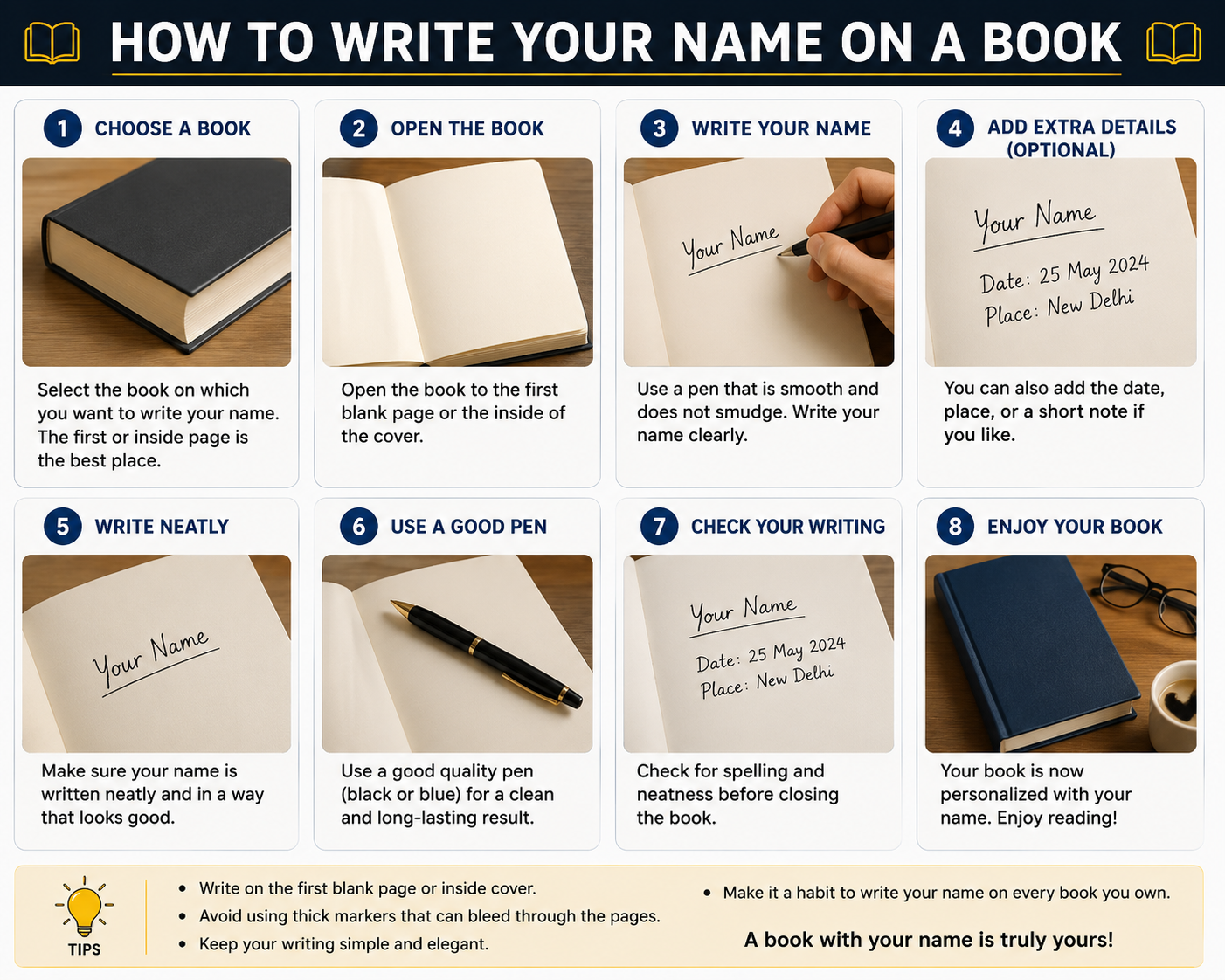
Step 1: Choose the Right Location
Select a clean area such as:
- Inside front cover
- First page
- Bookplate
Avoid writing directly over printed text.
Step 2: Use Clear Handwriting
Write neatly and legibly.
Example:
Property of Noor Ahmed
or
This Book Belongs to Noor Ahmed
Step 3: Add Contact Information (Optional)
If you frequently lend books to others, consider adding:
- Phone number
- Email address
Example:
Noor Ahmed
Phone: 0300-1234567
This increases the chances of recovering a lost book.
Step 4: Let Ink Dry
Allow several seconds for the ink to dry before closing the book.
This prevents smudging and keeps pages clean.
Creative Ways to Write Your Name on a Book
Personal Signature
Use your signature instead of writing your full name.
Benefits:
- Professional appearance
- Unique identification
- Harder to duplicate
Decorative Lettering
Book lovers often use artistic handwriting styles.
Popular options include:
- Calligraphy
- Cursive writing
- Modern hand lettering
These styles add personality to your books.
Custom Stamp
A personalized stamp is ideal for large book collections.
Benefits:
- Fast labeling
- Consistent appearance
- Professional look
Libraries frequently use this method.
How Students Should Label Their Books
Students often carry multiple textbooks and notebooks.
A complete label should include:
- Student name
- Class
- Roll number
- Subject
Example:
Name: Noor Ahmed
Class: 10th Grade
Subject: English
This helps teachers and classmates identify books easily.
Writing Your Name on School Books
School books are often shared, exchanged, or misplaced.
Follow these tips:
- Use permanent ink
- Write clearly
- Include class information
- Protect labels with transparent tape if needed
Proper labeling saves time and reduces confusion.
Writing Your Name on Library Books
Generally, you should never write your name directly on books borrowed from public or school libraries.
Instead:
- Use removable bookmarks
- Insert name cards
- Use sticky notes temporarily
Writing on library property may damage the book and violate library policies.
Writing Your Name on Valuable Books
Rare or collectible books require extra care.
Experts recommend:
- Avoid permanent ink
- Use removable bookplates
- Store ownership records separately
- Consult preservation guidelines
Collectors often avoid writing directly on valuable editions.
Common Mistakes to Avoid
Writing on the Cover
Some book covers can become damaged by ink.
It’s usually better to write inside the book.
Using Low-Quality Markers
Cheap markers may:
- Smudge
- Fade
- Bleed through pages
Choose high-quality writing tools whenever possible.
Writing Too Large
Large lettering can look messy and reduce the book’s appearance.
Keep text neat and proportional.
Writing Over Printed Content
Always use blank areas to avoid damaging important information.
Benefits of Personalizing Your Books
Adding your name offers several advantages beyond ownership.
Benefits include:
- Personal connection with books
- Better organization
- Easier identification
- Reduced risk of loss
- Professional library management
Many readers enjoy seeing their name inside books they cherish.
Digital Alternatives
Modern technology provides additional ownership methods.
Examples include:
- QR code labels
- NFC tags
- Digital inventory systems
- Book management apps
These tools are particularly useful for large personal libraries.
Best Name Formats for Books
Here are some popular formats:
Simple Format
Noor Ahmed
Ownership Format
This Book Belongs To Noor Ahmed
Professional Format
Property of Noor Ahmed
Contact Format
Noor Ahmed
Email: noor@example.com
Choose the format that best suits your needs.
Conclusion
Writing your name on a book is a simple yet effective way to establish ownership, stay organized, and protect your collection. Whether you’re a student labeling textbooks, a professional managing reference materials, or a passionate reader building a personal library, proper book identification can save time and prevent loss.
The best practice is to write your name neatly inside the front cover or on a blank page using a high-quality pen. For valuable books, consider using removable bookplates or ownership labels instead of writing directly on the pages.
By following these guidelines, you can personalize your books while maintaining their appearance and value for years to come.