

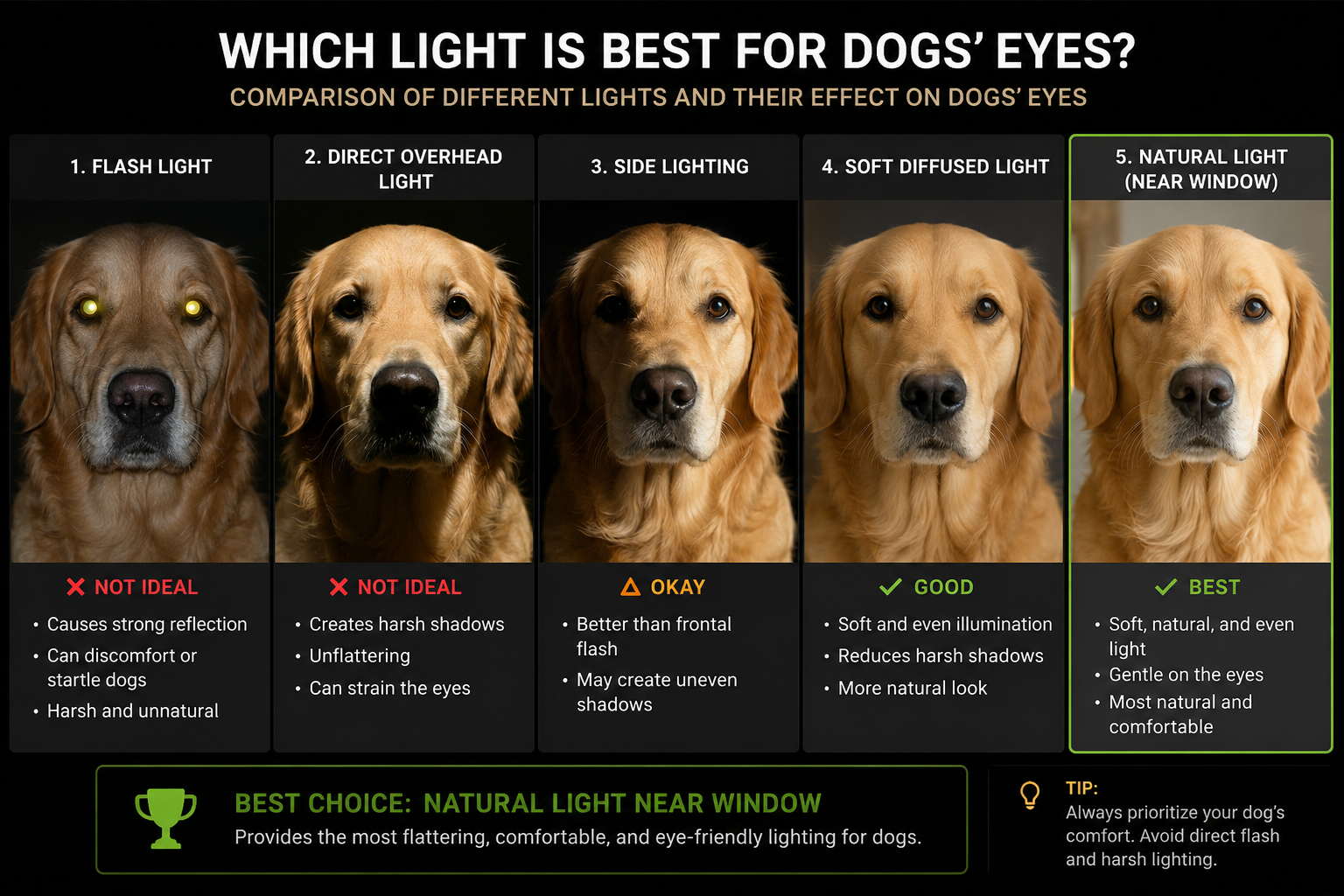
Dogs rely heavily on their vision to navigate the world, recognize familiar faces, and interact with their surroundings. While dogs can see well in low-light conditions, their eyes are also sensitive to certain types of lighting. Many pet owners wonder: Which light is best for dogs’ eyes? Understanding the impact of different lighting conditions can help protect your dog’s eye health, reduce discomfort, and create a more comfortable living environment.
In this comprehensive guide, we will explore the best lighting options for dogs, how various light sources affect canine vision, and practical tips for maintaining healthy eyes.
Understanding How Dogs See Light
Before discussing the best lighting choices, it is important to understand how dogs perceive light differently from humans.
Dogs have a special reflective layer behind their retina called the tapetum lucidum. This structure enhances their ability to see in dim conditions by reflecting light back through the retina. It is also responsible for the glowing appearance of dogs’ eyes in photographs taken with flash.
Because of this adaptation, dogs generally see better in low light than humans. However, excessive brightness or harsh lighting can still cause discomfort and stress.
Why Lighting Matters for Dogs
Proper lighting affects more than just visibility. It can influence:
- Eye comfort
- Stress levels
- Sleep quality
- Daily activity patterns
- Overall well-being
Choosing suitable lighting helps dogs feel relaxed and reduces unnecessary strain on their eyes.
Natural Light: The Best Choice for Dogs’ Eyes
Why Natural Light Is Ideal
Natural daylight is widely considered the best lighting source for dogs. It provides balanced illumination without the harsh intensity often associated with artificial lighting.
Benefits of natural light include:
- Soft and even illumination
- Reduced eye strain
- Better regulation of sleep cycles
- Enhanced mood and activity levels
- More natural visual perception
Dogs exposed to healthy amounts of daylight often maintain more consistent sleeping and waking patterns.
Window Lighting
A bright room with indirect sunlight entering through windows creates one of the most eye-friendly environments for dogs.
Advantages include:
- Gentle brightness
- Natural color rendering
- Comfortable visibility
- Reduced glare
However, direct sunlight for prolonged periods can become uncomfortable, especially during hot weather.
Tips for Using Natural Light
- Provide shaded resting areas.
- Use curtains to soften intense sunlight.
- Allow your dog to choose between sunny and shaded spots.
- Ensure fresh water is always available.
Soft Diffused Light: The Best Artificial Option
When natural daylight is unavailable, soft diffused lighting is the next best choice.
What Is Diffused Light?
Diffused light spreads evenly throughout a room without creating harsh shadows or intense glare.
Examples include:
- Lamps with fabric shades
- Frosted LED bulbs
- Indirect ceiling lighting
- Soft ambient lighting systems
Benefits for Dogs
Soft diffused lighting:
- Minimizes eye strain
- Creates a calm environment
- Reduces sudden brightness changes
- Helps older dogs navigate safely
This type of lighting closely mimics the comfortable qualities of natural daylight.
LED Lights and Dogs’ Eyes
Are LED Lights Safe for Dogs?
Yes, high-quality LED lights are generally safe for dogs when used properly.
Modern LEDs offer:
- Energy efficiency
- Long lifespan
- Consistent illumination
- Adjustable brightness
Choosing Dog-Friendly LEDs
Look for LEDs that:
- Produce warm white light
- Avoid excessive blue light
- Offer dimming capabilities
- Have flicker-free technology
Warm white LEDs between 2700K and 3500K tend to be more comfortable for both humans and pets.
Potential Issues with Poor-Quality LEDs
Some low-quality LEDs may flicker rapidly. While humans may not notice the flicker, dogs can sometimes detect it due to their higher visual sensitivity.
Flickering lights may contribute to:
- Anxiety
- Restlessness
- Visual discomfort
Always invest in reputable lighting products.
Warm Light vs Cool Light for Dogs
Warm Light
Warm light typically has a yellow or soft amber appearance.
Benefits include:
- Relaxing atmosphere
- Reduced eye stress
- Better evening comfort
- Improved sleep environment
Warm lighting is ideal during nighttime and relaxation periods.
Cool Light
Cool white or bluish light appears brighter and sharper.
Potential drawbacks include:
- Increased visual stimulation
- Possible sleep disruption
- Less natural indoor atmosphere
While cool light can be useful in active areas, it should not dominate your dog’s sleeping environment.
Lights Dogs May Find Uncomfortable
Certain lighting conditions can negatively affect dogs.
Direct Flash Photography
Camera flashes are among the most common causes of temporary visual discomfort.
Flash can:
- Create sudden brightness
- Cause eye reflections
- Startle sensitive dogs
Occasional flash use is generally harmless, but repeated exposure should be minimized.
Harsh Overhead Lighting
Strong overhead lights can create:
- Sharp shadows
- Uneven brightness
- Eye fatigue
This type of lighting may be especially problematic for older dogs or dogs with vision problems.
Laser Pointers
While not traditional lighting, laser pointers deserve special mention.
Potential concerns include:
- Eye damage if directed into the eyes
- Obsessive behavior development
- Increased anxiety
Veterinarians generally discourage frequent laser pointer games.
Special Lighting Considerations for Senior Dogs
Older dogs often experience age-related eye conditions such as:
- Cataracts
- Nuclear sclerosis
- Glaucoma
- Progressive retinal atrophy
These conditions can make navigation more challenging.
Recommended Lighting for Senior Dogs
Senior dogs benefit from:
- Consistent lighting
- Soft ambient illumination
- Night lights in hallways
- Reduced glare
Maintaining predictable lighting helps older dogs move around safely and confidently.
Night Lighting for Dogs
Do Dogs Need Lights at Night?
Most healthy dogs do not require bright lighting at night.
Thanks to their superior low-light vision, dogs can navigate effectively in dim environments.
Best Night Lighting Options
If nighttime lighting is needed:
- Use low-intensity warm lights.
- Install soft night lights.
- Avoid bright white illumination.
This approach preserves comfort while still allowing visibility.
How Lighting Affects a Dog’s Sleep
Just like humans, dogs follow circadian rhythms influenced by light exposure.
Healthy Sleep Practices
To support healthy sleep:
- Provide daylight exposure during the day.
- Reduce bright lighting in the evening.
- Maintain a quiet sleeping area.
- Avoid sudden light changes during rest periods.
Proper lighting helps regulate natural sleep cycles and promotes overall wellness.
Signs Your Dog May Be Sensitive to Lighting
Watch for these signs:
- Squinting frequently
- Avoiding brightly lit areas
- Excessive blinking
- Eye redness
- Restlessness near certain lights
- Increased anxiety
If symptoms persist, consult a veterinarian or veterinary ophthalmologist.
Creating the Perfect Lighting Environment for Dogs
A dog-friendly lighting setup should include:
Daytime
- Access to natural sunlight
- Window-filtered daylight
- Shaded resting spots
Evening
- Warm ambient lighting
- Soft lamps
- Reduced brightness
Night
- Minimal lighting
- Soft night lights when necessary
- Consistent placement of light sources
This balanced approach supports comfort throughout the day.
Frequently Asked Questions
Is sunlight good for dogs’ eyes?
Moderate exposure to natural daylight is beneficial. However, prolonged exposure to intense direct sunlight should be avoided.
Can bright lights hurt a dog’s eyes?
Extremely bright lights may cause temporary discomfort and stress, especially if exposure is prolonged.
Are LED lights bad for dogs?
Quality LED lights are generally safe. Flicker-free warm LEDs are the best option.
Do dogs prefer darkness when sleeping?
Most dogs prefer dim or dark environments for sleeping, similar to humans.
Can camera flash damage dogs’ eyes?
Occasional flash photography is unlikely to cause permanent damage, but frequent flashing may create discomfort.
Conclusion
When considering which light is best for dogs’ eyes, natural daylight remains the top choice. Soft, indirect sunlight provides the most comfortable and visually healthy environment for dogs. When natural light is unavailable, soft diffused warm lighting offers an excellent alternative.
Avoid harsh flashes, overly bright overhead lights, and flickering bulbs whenever possible. By creating a balanced lighting environment, pet owners can support their dog’s eye health, reduce stress, improve sleep quality, and enhance overall well-being.
A combination of natural daylight, warm LED lighting, and gentle nighttime illumination represents the ideal lighting strategy for keeping your dog’s eyes healthy and comfortable throughout every stage of life.