

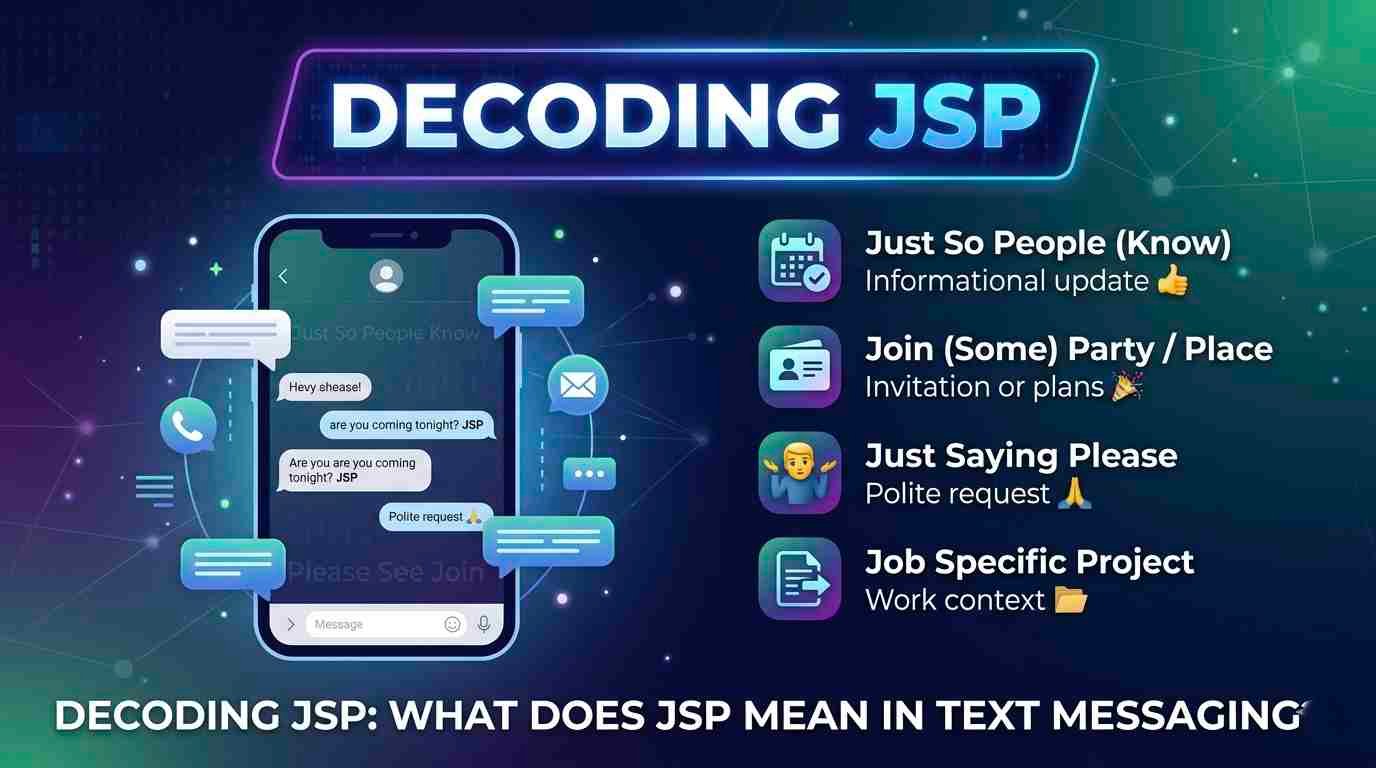
what does jsp mean in text Text messaging has transformed the way we communicate, giving rise to a slew of abbreviations and slang. Among these is JSP, a term that might leave some puzzled. If you’ve ever encountered this acronym in your chats and wondered what it means, you’re not alone. From casual conversations to more serious discussions, understanding text lingo can enhance your communication skills. Join us as we decode JSP and explore its various meanings, implications, and when it’s best to use—or avoid—it altogether!
Decoding JSP: What does JSP Mean in Text Messaging?
JSP is an acronym commonly used in text messaging, often signifying “Just Saying Peace.” It can convey a lighthearted tone or signify the end of a conversation. The meaning may vary based on context, but understanding its nuances is key to effective communication in today’s digital landscape. Let’s explore what JSP truly represents!
What Does JSP Stand For?
JSP stands for “Just Saying Please.” It’s a casual way to soften requests in text messaging. Using JSP adds a polite touch, making your message sound friendlier. It’s often used among friends or in informal settings where humor and lightness are appreciated. This acronym helps convey kindness without sounding demanding or pushy.
JSP Insanity
JSP insanity often stems from the playful chaos of texting. It captures moments of excitement or frustration, where communication becomes a whirlwind of emotions. The phrase can express over-the-top reactions to situations, ranging from hilariously exaggerated responses to serious dilemmas. This slang turns ordinary messages into colorful exchanges filled with personality and flair.
JSP Meaning in Text Messages: Explained
JSP is often used in text messaging as shorthand for “Just So Perfect.” It’s a way to express approval or admiration. When someone uses JSP, they’re highlighting something that meets their expectations wonderfully. This term conveys positivity and enthusiasm, making it perfect for compliments or affirmations among friends or loved ones, adding warmth to digital conversations.
What JSP Implies: Tone and Emotion Behind This Slang
JSP often carries a playful or sarcastic tone. It can express excitement, frustration, or even disbelief depending on the context. When someone uses JSP, they might be trying to lighten the mood or highlight something absurd. Understanding this emotional nuance helps decode the intended sentiment and enhances communication in casual conversations.
Where You’ll See JSP Most
JSP is commonly found in casual texting among friends and social media platforms. You’ll often see it in group chats, memes, or informal conversations where humor and sarcasm thrive. It’s less frequent in professional settings but may pop up between colleagues who share a relaxed rapport. Keep an ear out when scrolling through your favorite messaging apps!
Popular Alternative Meanings of JSP: Context Clues Matter
JSP can have different meanings based on context. For example, it might refer to “JavaServer Pages” in tech discussions or “Just Saying Peace” among friends. Paying attention to the conversation and the relationships involved is crucial for interpreting JSP correctly. Misunderstanding could lead to confusion, so always consider who you’re chatting with before jumping in.
Is JSP Still Common in 2025?
As of 2025, JSP continues to appear in casual conversations, especially among younger generations. Though its popularity has waned compared to newer slang, it still finds relevance in certain contexts. Many users appreciate the brevity and humor that JSP brings to text messaging, making it a nostalgic choice for some while remaining fresh for others.
When You Should Use JSP
Use JSP when you want to convey excitement or enthusiasm about something. It’s perfect for sharing good news, making plans, or expressing joy in casual conversations. This slang works well among friends who understand the context and feel comfortable with informal language. Just ensure your recipient is familiar with such abbreviations before hitting send.
When You Should NOT Use JSP
Avoid using JSP in formal communications, such as work emails or professional texts. It’s inappropriate for serious discussions where clarity is essential. If your message might be misinterpreted, opt for clearer language. Additionally, steer clear of this slang when addressing someone unfamiliar with it; it can lead to confusion and misunderstandings that could easily be avoided.
25 Better Alternatives to JSP (Polite, Friendly and Professional)
If JSP feels too casual, consider alternatives like “I appreciate your input,” “Thank you for understanding,” or “Let’s discuss this further.” You might also try phrases such as “Your thoughts are valuable” or “Looking forward to hearing from you.” Keeping communication polite and professional fosters better relationships in both personal and work environments.
How to Choose the Right Phrase
Choosing the right phrase depends on context and relationship. Consider your audience’s familiarity with slang, their mood, and the situation. Light-hearted phrases work well among friends, while professional settings call for clarity and respect. Always aim for a tone that feels natural to you but is appropriate for the conversation at hand.
Expert Tips: How to Avoid Sounding Passive-Aggressive
To steer clear of passive-aggressive tones, focus on clarity. Use direct language and express your thoughts openly. Avoid sarcasm or vague hints that can confuse the recipient. Stick to “I” statements to convey feelings without assigning blame. Maintain a calm demeanor in your writing to foster understanding and promote effective communication.
Real Text Scenarios: JSP Used Right vs Wrong
what does jsp mean in text Imagine texting a friend about weekend plans. “You’re late again, JSP.” This feels sarcastic and confrontational. On the flip side, saying, “I’m sorry if I came across as JSP earlier” shows self-awareness and openness. The key lies in context: use it lightly among friends but avoid it in serious conversations to prevent misunderstandings.
Quick Reference Cheat Sheet
Need a quick reminder of what JSP means in text messaging? Here’s your cheat sheet:
– JSP stands for “Just Saying Peace.”
– Use it to express casual farewell or indifference.
– Commonly seen among friends and on social media.
– Avoid in formal conversations.
Keep this handy for when you encounter the phrase!
FAQs About JSP Meaning in Text
What does JSP mean in text messaging? It stands for “Just Saying Peace.” Is it used frequently? Yes, especially among younger audiences. Can it be offensive? Context matters; always consider the conversation tone. Are there alternatives to JSP? Definitely! Options like “just saying” or emoji can express similar sentiments without confusion.
Final Thoughts
what does jsp mean in text Understanding what JSP means in text messaging can help you navigate conversations more smoothly. As slang evolves, so does the need for effective communication. Whether you’re using JSP casually or considering its alternatives, being aware of tone and context is crucial.
As language continues to shift with technology, staying updated on terms like JSP ensures your messages resonate well. Embrace creativity in your texts while remaining mindful of how phrases can be interpreted differently by others. Mastering these nuances will enhance your texting experience and foster better connections with friends and family alike.
 alirza54304@gmail.com