

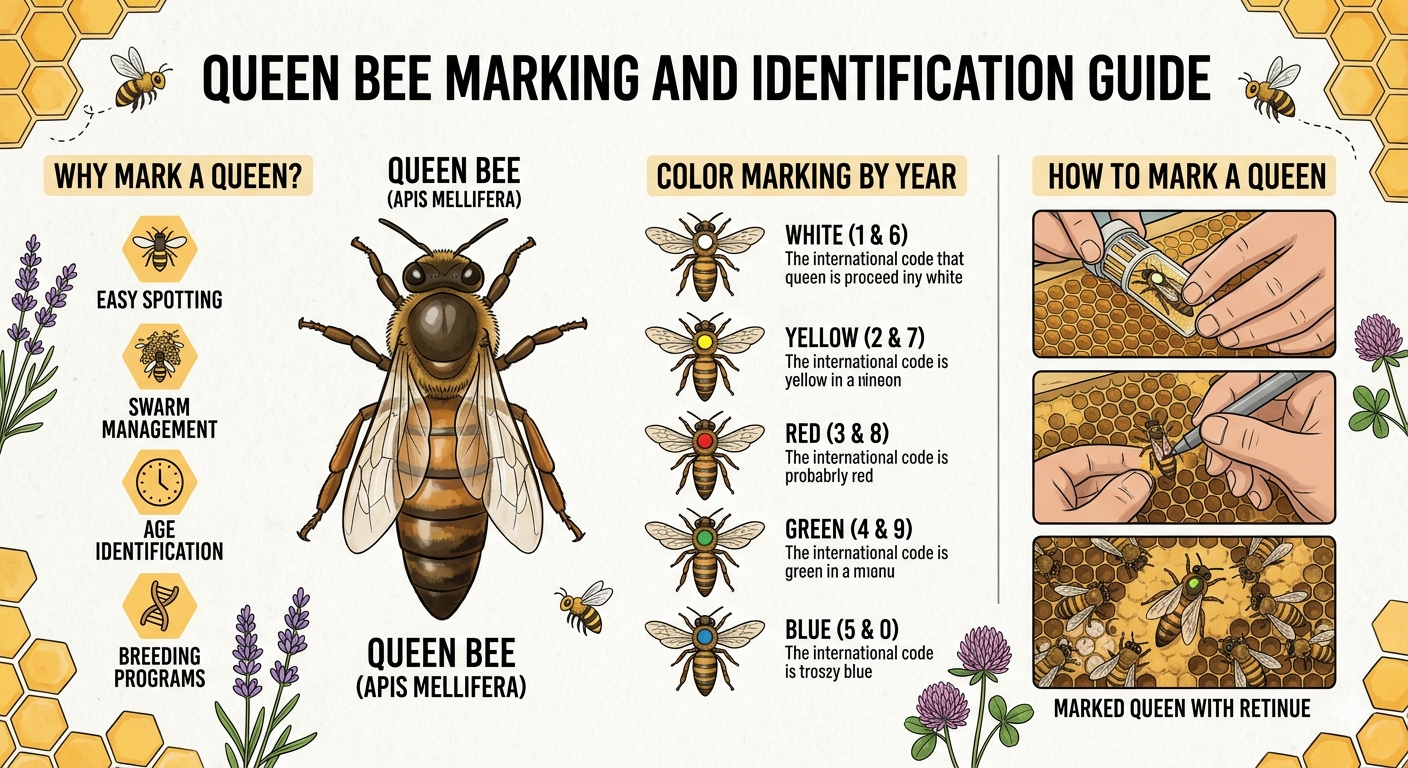
Learn how to mark, identify, and track queen bees effectively for better hive management, breeding, and record keeping.

Introduction
Queen bee marking is a valuable practice in modern beekeeping. A marked queen is easier to locate during inspections, which saves time, reduces stress on the colony, and helps beekeepers monitor queen performance. Whether you are a hobbyist with a single hive or a commercial beekeeper managing hundreds of colonies, understanding queen identification and marking techniques can improve your hive management significantly.
This guide covers the basics of queen bee identification, the international queen marking color system, marking methods, and best practices for safely handling queens.
How to Identify a Queen Bee
Before marking a queen, you must be able to identify her among thousands of worker bees.
Larger body size
The queen is usually longer than worker bees, especially in the abdomen.
Distinct abdomen
Her abdomen extends beyond the tips of her wings and appears more tapered.
Worker retinue
Worker bees often form a circle around the queen, facing her and attending to her needs.
Movement pattern
Queens tend to move purposefully across the comb while workers frequently change direction.
Finding the queen becomes easier with practice and good lighting.
Why Mark a Queen Bee?
Marking provides several advantages:
- Faster queen location during inspections.
- Easy identification of queen age.
- Better tracking of supersedure events.
- Improved breeding and record keeping.
- Reduced inspection time and colony disturbance.
International Queen Marking Color System
The beekeeping industry uses a standardized color code that indicates the queen’s birth year.
| Year ending in | Color |
|---|---|
| 1 or 6 | White |
| 2 or 7 | Yellow |
| 3 or 8 | Red |
| 4 or 9 | Green |
| 5 or 0 | Blue |
Memory aid: “Will You Raise Good Bees?” (White, Yellow, Red, Green, Blue).
For example, a queen reared in 2026 would be marked White because the year ends in 6.
Queen Marking Equipment
You can mark queens with simple tools.
Queen marking pen
Special non-toxic paint pens designed for bees.
Queen marking cage or tube
Helps restrain the queen safely during marking.
Protective gear
Veil, gloves, and hive tool as needed.
Good lighting
Makes identification and accurate marking easier.
How to Mark a Queen Bee
1. Locate the queen
Carefully inspect frames until you find the queen.
2. Secure her gently
Place the queen in a marking cage or tube. Avoid squeezing her abdomen.
3. Apply the mark
Place a small dot of paint on the center of the thorax, the hard section between the head and abdomen.
4. Allow the paint to dry
Wait a few seconds before releasing the queen.
5. Return the queen to the colony
Place her back onto a frame with worker bees and observe that workers accept her normally.
Important
Never use large amounts of paint, and avoid marking the wings, legs, or abdomen.
Alternative Identification Methods
While paint marking is most common, some beekeepers use:
Numbered queen tags
Small discs glued to the thorax for precise record keeping.
Wing clipping
A controversial method that helps prevent swarming but requires skill and care.
Electronic hive records
Tracking queen lineage and age through software or hive management apps.
Best Practices for Queen Marking
- Mark queens during calm weather.
- Work gently and avoid excessive handling.
- Use only non-toxic, quick-drying paint.
- Record the queen’s color, age, and colony information.
- Inspect the colony after marking to ensure normal queen acceptance.
Common Mistakes to Avoid
- Using too much paintThick paint can hinder movement and attract unwanted attention from workers.
- Marking the wrong body partAlways mark the thorax, not the abdomen or wings.
- Handling the queen roughlyQueens are delicate and can be injured by excessive pressure.
- Releasing her before the paint driesWet paint may smear onto workers or be cleaned off immediately.
When to Replace a Queen
Marked queens make it easier to determine age and productivity. Many beekeepers consider replacing queens when:
- Egg laying becomes irregular.
- Colony temperament deteriorates.
- Swarming frequency increases.
- The queen is more than two to three years old and colony performance declines.
Conclusion
Queen bee marking is a simple yet highly effective beekeeping skill. By learning to identify and safely mark queens, you can streamline inspections, maintain accurate records, and better understand the health and productivity of your colonies. Following the international color code also allows quick recognition of a queen’s age at a glance.
Whether you keep a few backyard hives or manage a larger apiary, consistent queen identification practices will make your beekeeping more efficient and professional.
 EchoLinkers