

When it comes to Mediterranean cuisine, few things rival the pairing of fresh, perfectly cooked seafood with artisanal Italian pasta. If you have been searching for the ultimate coastal comfort food, you have likely come across unique pasta shapes designed specifically to mimic and complement the ocean’s bounty.
In this comprehensive guide, we will dive deep into the world of Calamarata (often colloquially referred to or searched as calamariere), exploring its origins, culinary mechanics, the ultimate traditional recipes, and how to master this stunning dish at home.
What is Calamarata (Calamariere) Pasta?
To understand this dish, we must first look at the pasta itself. Calamarata is a thick, ring-shaped pasta native to Naples and the Campania region of Southern Italy.
The Shape and Design
The name is derived directly from calamari (squid), and for a very intentional reason: when cut into thick, circular bands, the pasta looks almost identical to sliced squid rings.
- Texture: It is a smooth, wide, and sturdy pasta made from high-quality durum wheat semolina.
- The Culinary Purpose: The wide, hollow center is engineered to trap heavy seafood sauces, minced herbs, garlic, and small pieces of seafood inside the ring, ensuring that every single bite delivers a perfect balance of pasta and sauce.
Calamarata vs. Paccheri
While it looks similar to another famous Neapolitan pasta called Paccheri, Calamarata is essentially Paccheri cut in half. This shorter, ring-like profile allows it to blend seamlessly visually with actual squid rings in a bowl, creating a beautiful culinary illusion where it becomes difficult to tell the pasta from the seafood until you take a bite.
The Anatomy of the Perfect Seafood Calamarata
A traditional Calamarata Napoletana relies on simple, high-quality ingredients working in perfect harmony. Because Mediterranean cooking is inherently minimalist, the success of the dish depends entirely on the freshness of your components.
1. The Seafood Base
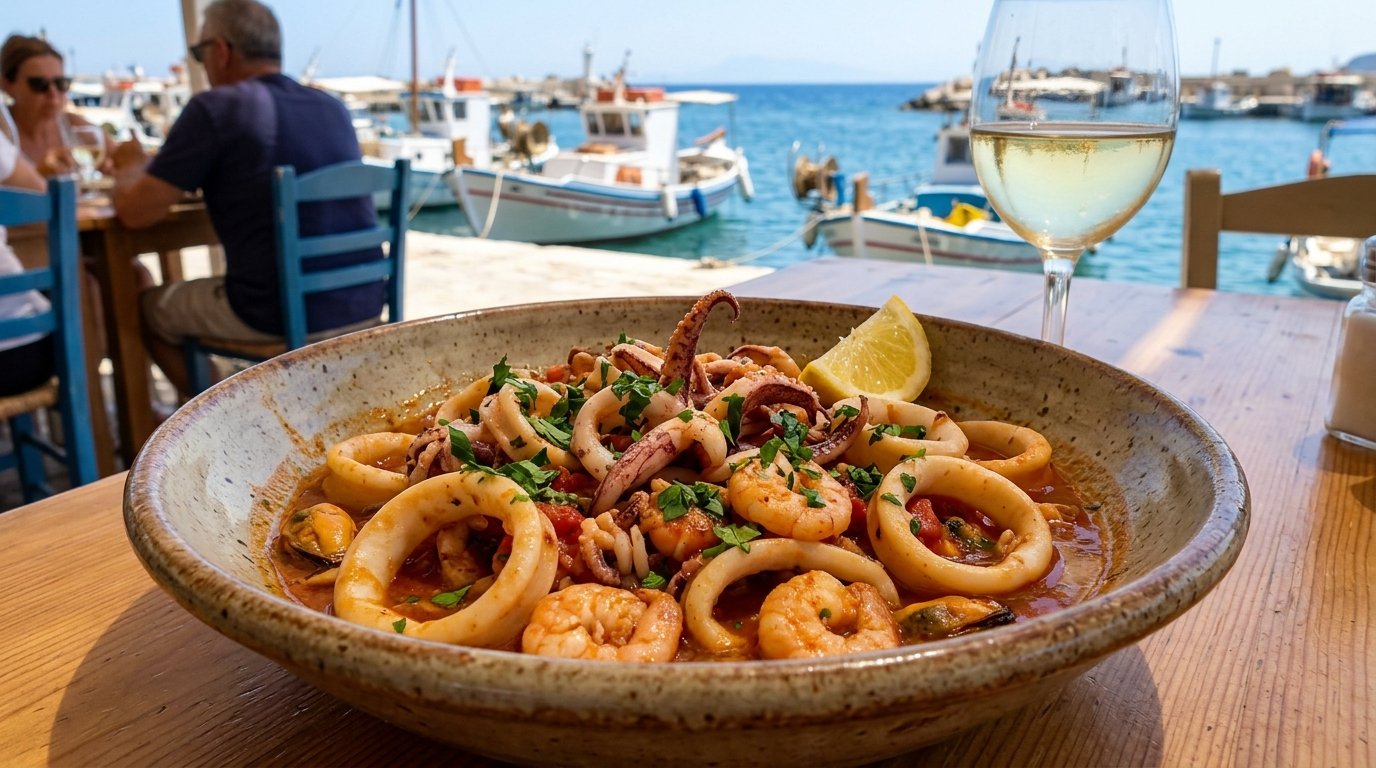
While squid is the undisputed star, premium variations often incorporate a rich mix of Mediterranean seafood, much like the vibrant dish pictured below:
- Squid (Calamari): Cleaned and sliced into rings that match the exact width of the pasta.
- Shrimp & Prawns: Added during the final minutes of cooking to maintain a sweet, snappy texture.
- Mussels & Clams: Steamed open directly in the sauce base to release their natural, briny juices, which form the foundation of the broth.
2. The Sauce (Sugo)
Unlike heavy, cream-based seafood pasta dishes found in Western adaptations, an authentic Southern Italian seafood pasta utilizes a light, intensely flavorful tomato and white wine reduction.
- The Aromatics: Sliced garlic, fresh red chili flakes (or fresh peperoncino), and a generous handful of flat-leaf Italian parsley.
- The Tomatoes: Typically made with sweet cherry tomatoes (pomodorini) or high-quality San Marzano plum tomatoes crushed by hand. The goal is a loose, saucy consistency rather than a thick, heavily stewed marinara.
- The Deglazing Agent: A crisp, dry Italian white wine (like Falanghina, Pinot Grigio, or Vermentino) to cut through the richness of the seafood and olive oil.
Authentic Neapolitan Calamarata Recipe
Here is how to recreate a restaurant-quality Mediterranean seafood experience right in your own kitchen.
Ingredients Checklist
- Pasta: 400g high-quality, bronze-die extruded Calamarata pasta.
- Seafood: 400g fresh squid (cleaned and cut into rings), 200g fresh shrimp (peeled and deveined), and optionally 200g of mussels or clams.
- Produce: 300g cherry tomatoes (halved), 3 cloves of garlic (thinly sliced), and 1 bunch of fresh flat-leaf parsley (finely chopped).
- Pantry: 4 tablespoons of extra virgin olive oil, 21 cup of dry white wine, salt, and red pepper flakes to taste.
- Garnish: Fresh lemon wedges.
Step-by-Step Cooking Instructions
Step 1: Prep and Sauté the Aromatics
Bring a large pot of salted water to a rolling boil. In a large, wide skillet, heat the extra virgin olive oil over medium heat. Add the sliced garlic and a pinch of red pepper flakes. Sauté gently for 1–2 minutes until the garlic is fragrant and translucent, ensuring it does not burn or turn bitter.
Step 2: Cook the Squid
Turn the heat up to medium-high and add the cleaned squid rings and tentacles to the skillet. Sauté the squid quickly for about 2 to 3 minutes. Squid cooks exceptionally fast; high heat for a short duration keeps it tender rather than rubbery.
Step 3: Deglaze with White Wine
Pour in the dry white wine, letting it bubble rapidly until the alcohol aroma evaporates and the liquid reduces by half (about 2 minutes). This incorporates the seafood juices into a rich, emulsified base.
Step 4: Build the Tomato Broth
Add the halved cherry tomatoes to the pan. Season with a light pinch of salt, lower the heat to medium, and cover the pan. Let the tomatoes cook down for 8–10 minutes until they begin to burst and release their sweet juices, mingling with the white wine and squid broth. If using extra shellfish like shrimp or mussels, drop them into the pan during the final 3–4 minutes of this simmering process.
Step 5: Cook the Pasta Al Dente
While your sauce is simmering, drop the Calamarata pasta into the boiling water. Because it is a thick, dense pasta shape, it generally requires a longer cooking time (usually between 10 to 13 minutes). Check the package instructions, but aim to pull the pasta out 2 minutes before it reaches perfect al dente.
Step 6: The “Mantecatura” (Finishing the Dish)
Using a slotted spoon or spider strainer, transfer the pasta directly from the water into the simmering seafood sauce. Toss the pasta vigorously over high heat. Add a ladleful of the starchy pasta cooking water to the pan.
Chef’s Tip: The starch from the pasta water combines with the olive oil and tomato juices to create a silky, glossy sauce that clings flawlessly to the wide pasta rings, preventing it from pooling dry at the bottom of the plate.
Step 7: Garnish and Serve
Remove the pan from the heat. Stir in a massive handful of finely chopped fresh parsley and a final drizzle of raw, premium extra virgin olive oil. Serve immediately while piping hot, accompanied by fresh lemon wedges.
Wine Pairing Guide for Seafood Pasta
To elevate this culinary experience to a true seaside restaurant standard, pairing it with the correct wine is essential. Because the dish features sweet seafood balanced by acidic tomatoes and a hint of chili heat, you want a white wine with bright acidity and strong mineral notes.
| Wine Varietal | Region | Profile | Why it Works |
|---|---|---|---|
| Falanghina | Campania, Italy | Crisp, citrusy, mineral-forward | The classic regional pairing; its natural salinity mirrors the seafood flawlessly. |
| Vermentino | Sardinia/Tuscany, Italy | Stone fruit, saline finish, refreshing | Cuts through the richness of the extra virgin olive oil and highlights the shrimp. |
| Fiano di Avellino | Campania, Italy | Medium-bodied, floral, nutty undertones | Adds a richer texture that pairs wonderfully with denser pasta shapes. |
Frequently Asked Questions (FAQs)
Why is my squid rubbery?
Squid follows a strict culinary rule: it must be cooked either very fast over high heat (2–3 minutes) or braised very slowly over low heat (over 45 minutes). Anything in between results in a tough, rubbery texture. For this pasta recipe, stick to the quick-sauté method.
Can I use a different pasta shape?
If you cannot find authentic Calamarata pasta, your best substitutes are Paccheri, Rigatoni, or Mezzi Rigatoni. Look for bronze-cut varieties, as their rough texture helps sauce adhere much better than smooth, mass-produced options.
Do Italians put cheese on seafood pasta?
As a general culinary rule across Italy, cheese (like Parmigiano or Pecorino) is never added to seafood pasta. The strong, salty, dairy profile of cheese tends to overpower the delicate, fresh flavors of the ocean. Rely on fresh herbs, garlic, and high-quality olive oil for maximum depth of flavor instead.