

Introduction: Discovering the Open-Air Museum of Mardin
Nestled in the heart of southeastern Turkey’s Mardin province lies Midyat, a city where time seems to have stood still for centuries. Known globally for its breathtaking stone architecture, multi-ethnic cultural tapestry, and deep-rooted historical significance, Midyat serves as a living open-air museum. For travelers, history enthusiasts, and cultural explorers, this ancient settlement offers an unparalleled journey into the cradle of human civilization: Mesopotamia.
As global travel trends increasingly lean toward authentic, off-the-beaten-path cultural experiences, Midyat has emerged as a premier destination. This article provides an in-depth exploration of Midyat’s history , its iconic architectural marvels, its unique cultural heritage, and practical insights for modern travelers looking to explore this mesmerizing Turkish gem.
1. The Deep Historical Roots of Midyat
To truly appreciate Midyat, one must understand its positioning within the historical landscape of Upper Mesopotamia. The region has been continuously inhabited for thousands of years, serving as a crossroads for various empires, civilizations, and religious groups.
Ancient Origins and Empires
Historical records suggest that the foundations of Midyat date back to antiquity. The city’s name is believed to have derived from an ancient Assyrian word meaning “city of caves” or “caves,” a nod to the early subterranean dwellings found throughout the region. Throughout its long history, Midyat was ruled by major global powers, including:
- The Hurrians and Mitanni Kingdoms: Early Bronze Age civilizations that shaped the initial region.
- The Neo-Assyrian Empire: Under whose rule the area became a crucial administrative and cultural hub.
- The Roman and Byzantine Empires: Who fortified the region as an eastern frontier against Persian incursions.
- The Islamic Dynasties: Including the Abbasids, Artuqids, and eventually the Ottoman Empire, each leaving an indelible mark on the local culture and architecture.
A Sanctuary for Diversity
What sets Midyat apart from many other historic cities is its role as a peaceful sanctuary for diverse religious and ethnic communities. For centuries, Syriac Christians (Suryoyo), Muslims, Yazidis, and Kurds have lived side-by-side. This cultural mosaic is heavily reflected in the local dialect, traditions, cuisine, and, most visibly, the skyline of the city, where church bell towers and mosque minarets stand in perfect visual harmony.
2. The Architectural Marvel: Midyat’s Signature Limestone
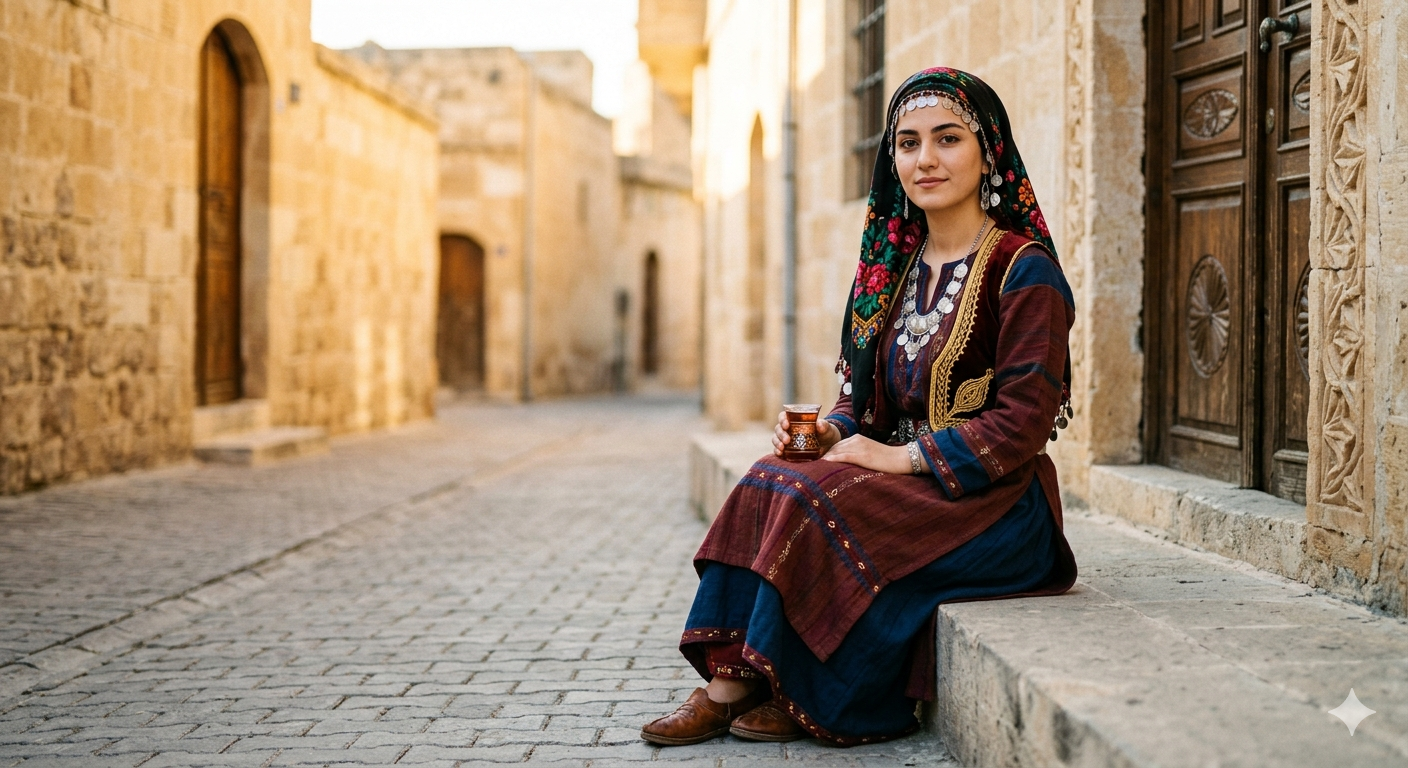
The defining characteristic of Midyat is undoubtedly its architecture. The old town, known as Eski Midyat, is a labyrinth of narrow, winding cobblestone streets flanked by imposing mansion walls built from a unique local material.
The Magic of Midyat Stone (Katori)
The buildings in Midyat are constructed using a local beige limestone known as Katori. This stone possesses unique geological properties:
- Malleability: When first quarried, the stone is relatively soft, allowing local stonemasons to carve intricate, lace-like geometric and floral patterns directly onto the facades.
- Durability: Upon exposure to the open air and sunlight over time, the stone hardens significantly, ensuring that the structures can withstand the elements for centuries.
- Thermal Regulation: The limestone provides natural insulation, keeping the interiors of the homes cool during the scorching Mesopotamian summers and retaining heat during the chilly winter months.
The Structure of a Midyat Mansion (Konak)
Traditional Midyat houses are designed with privacy, climate, and community in mind. They typically feature:
- High Outer Walls: To protect the family’s privacy from the street.
- Inner Courtyards (Avlu): The heart of the home, often featuring stone ovens, wells, and seating areas where families gather.
- Grand Terraces (Eyvan): Semi-open arched spaces on the upper floors designed to capture evening breezes, offering panoramic views of the sprawling stone city below.
3. Must-Visit Landmarks in Midyat
For anyone planning a trip to Midyat, the city offers a wealth of historical sites that showcase its dual Christian and Islamic heritage.
The Midyat State Guest House (Midyat Konuk Evi)
Arguably the most famous structure in the city, this massive, three-story stone mansion sits at one of the highest points in Old Midyat. It is a masterpiece of traditional stone carving. Visitors can explore its winding staircases, historic rooms, and expansive terraces. The mansion has gained immense popularity across the Middle East and South Asia as the filming location for several high-profile Turkish television dramas, making it a hotspot for media tourism.
Mor Barsaumo Church
Located in the heart of the old town, this Syriac Orthodox church stands as a testament to the city’s deep Christian roots. Its elegant bell tower dominates the local skyline, and the interior features austere yet beautiful stone altars that have hosted prayers for generations.
The Cevat Pasha Mosque
Built in the early 20th century by an Ottoman general, this mosque is a stunning example of how Islamic architecture integrated seamlessly with local Midyat stone-carving traditions. Its minaret features unique geometric patterns that mirror the artistic style seen on the surrounding Christian mansions.
The Gelüşke Hanı (Gelüşke Caravanserai)
Historically a bustling commercial hub where traders along the Silk Road would rest their camels and trade goods, this restored caravanserai now serves as a cultural center. Visitors can sit in its historic courtyard, enjoy traditional Turkish tea or Syrian coffee, and shop for local handicrafts.
4. The Surrounding Treasures: Tur Abdin Region
Midyat serves as the cultural heart of Tur Abdin, a plateau region in southeastern Turkey considered a holy land by the Syriac Orthodox Church. A short drive outside the city center reveals some of the oldest functioning Christian monasteries in the world.
Mor Gabriel Monastery (The Monastery of St. Gabriel)
Founded in 397 AD, Mor Gabriel is the oldest surviving Syriac Orthodox monastery in the world. It predates many European cathedrals by centuries. Built into the rugged landscape, the monastery features stunning Byzantine mosaics, grand vaulted ceilings, and ancient burial crypts. Today, it remains an active place of worship, a theological school, and a residence for monks and nuns who still speak Aramaic, the language of Jesus Christ.
Mor Yakup Monastery
Another architectural marvel hidden in the nearby cliffs, this monastery offers a serene escape. Its stone preservation is immaculate, showing the incredible engineering skills of early Christian ascetics who sought spiritual isolation in the Mesopotamian hills.
5. Traditional Crafts: The Art of Telkari
No discussion of Midyat is complete without highlighting its world-renowned artisanal heritage. The city is the global capital of Telkari, an ancient jewelry-making technique.
What is Telkari?
Telkari is the art of silver filigree. Master craftsmen melt pure silver into incredibly fine wires, sometimes as thin as a human hair. These wires are then painstakingly twisted, braided, and soldered together entirely by hand to form intricate jewelry pieces, including:
- The Midyat Shahmaran: Pendants depicting the mythical half-woman, half-snake creature symbolizing wisdom and protection.
- Intricate Rings and Earrings: Utilizing delicate lace patterns that mirror the stonework found on the city’s mansions.
Visiting the silver bazaars in Midyat allows travelers to watch these master artisans work in real-time, preserving a craft passed down through generations from master to apprentice.
6. Culinary Traditions of Midyat
Southeastern Turkish cuisine is famous for its rich spices, slow-cooked meats, and cultural blending, and Midyat is no exception.
Local Delicacies to Try
- Midyat Tandır Kebabı: Succulent lamb slow-roasted in a traditional clay pit oven until it falls off the bone.
- Süryani Şarabı (Syriac Wine): Produced locally by Christian families using ancient, organic fermentation methods and regional grapes, offering a dry, deeply flavored taste unique to the region.
- Mardin Kebabı: Spiced minced meat grilled over open charcoal, heavily infused with local herbs.
- Kliye: A traditional regional dish consisting of diced meat cooked thoroughly with onions and local clarified butter.
Conclusion: Why Midyat Belongs on Your Travel Bucket List
Midyat is far more than just a scenic backdrop; it is a profound testament to human resilience, artistic mastery, and cultural harmony. From the golden hues of its limestone mansions at sunset to the soft chime of church bells echoing alongside the call to prayer, the city offers a sensory journey back in time.
As global travelers increasingly seek destinations rich in heritage, sustainability, and authentic storytelling, Midyat stands ready to captivate the world. Whether you are walking through the historic corridors of the State Guest House, sipping spiced Syriac wine, or marveling at the ancient halls of Mor Gabriel, Midyat promises an unforgettable encounter with the true soul of Mesopotamia.
SEO Optimization Summary for Content Creators
- Primary Focus Keywords: Midyat history, Midyat stone architecture, Tur Abdin monasteries, Old Midyat travel, Mor Gabriel Monastery, Telkari silver filigree.
- Meta Description: Explore the historic stone city of Midyat, Turkey. Discover its ancient limestone architecture, Syriac Christian monasteries like Mor Gabriel, and the traditional art of Telkari silver filigree in this complete travel guide.